


Ultrasound-guided treatment using Clarius HD3, ensuring safer results and expert complication management.
What Is Clarius HD3 Ultrasound?
Blepharoplasty (Eyelid Surgery) is a surgical procedure typically performed to improve the cosmetic appearance of the eyelids.
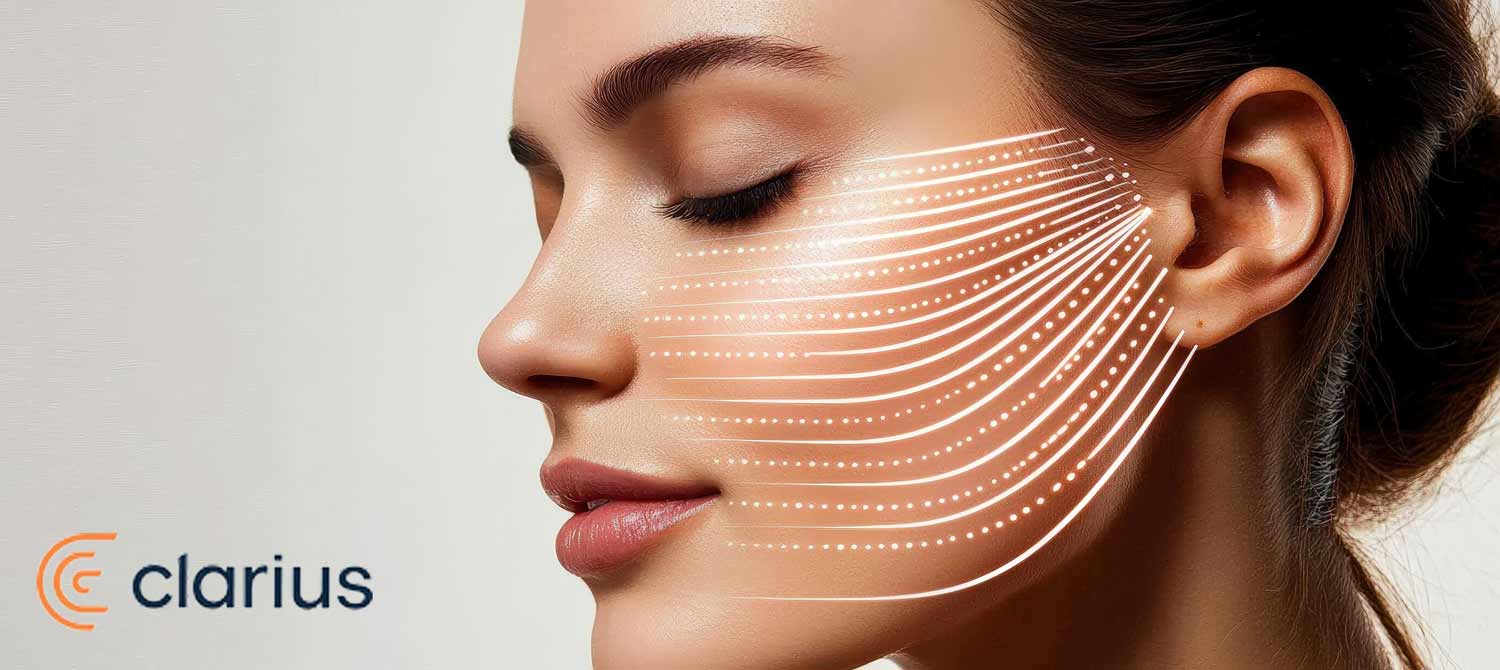
Dr Elizabeth Hawkes is trained in the use of Clarius HD3 Ultrasound, a device that allows facial ultrasound scanning to identify, mitigate, and manage complications related to dermal fillers.
All aesthetic treatments carry risks. Although serious complications are rare, dermal filler injections and filler migration can cause a range of problems, from cosmetic concerns to significant health issues. By integrating Clarius HD3 Ultrasound into her practice, Dr Hawkes enhances the safety and precision of aesthetic and surgical procedures.
Applications of Clarius HD3 Ultrasound in Aesthetic and Surgical Practice
Dr Elizabeth Hawkes utilises Clarius HD3 Ultrasound in three key areas:
Ensuring Safer Aesthetic Treatments
Clarius HD3 provides real-time, high-resolution imaging of facial anatomy, allowing for accurate mapping of blood vessels and underlying structures prior to treatment. This enhances injection precision, reduces the risk of complications such as intravascular injection, and supports safe filler placement. It is also used as a pre-treatment screening tool to locate existing filler and define safe injection angles.
Enhancing the Safety of Surgical Procedures
As an Oculoplastic Surgeon, Dr Hawkes works with delicate facial and periorbital tissues. Clarius HD3 allows precise preoperative mapping, helping avoid previously injected fillers, plan surgical approaches, and minimise complications. Understanding the exact location and volume of existing filler ensures tailored, patient-specific surgical planning and better outcomes.
Diagnosing and Managing Filler Complications
Filler complications, including migration, can be difficult to detect and treat without imaging. The Clarius HD3 enables non-invasive identification of migrated or problematic filler. In particular, it supports the safe administration of hyaluronidase by precisely locating filler deposits. This is especially valuable in delicate areas such as the tear troughs.
Understanding Filler Complications
While most dermal filler side effects are mild and resolve naturally, more serious complications may arise:
- Pain and Discomfort: Localised discomfort post-injection.
- Lumps and Bumps: Visible or palpable filler irregularities.
- Vascular Complications: Including vascular occlusion, tissue necrosis, and, in rare cases, visual impairment caused by disrupted blood flow.
-
Filler Migration: Movement of filler from its original placement, potentially leading to:
- Asymmetry
- Facial distortion
- Granulomas (inflammatory nodules)
Dr Hawkes’s anatomical expertise and careful injection technique are complemented by the diagnostic power of ultrasound, allowing for prompt detection and management of such issues.
Benefits of Clarius HD3 Ultrasound for Patients
- Enhanced Safety: Real-time imaging reduces risks by guiding precise injections and procedures.
- Better Outcomes: Accurate placement and early detection of issues promote superior aesthetic results.
- Timely Intervention: Faster diagnosis enables immediate and effective treatment of complications.
- Cost Efficiency: Preventing and treating complications early avoids the need for corrective procedures.
- Increased Confidence: Patients can feel assured that advanced technology supports their treatment journey.
By incorporating the Clarius HD3 into her practice, Dr Elizabeth Hawkes delivers a safer approach to aesthetic treatments and oculoplastic surgery
Treatment Areas
Which Areas Can Be Treated?

Full Face Visualisation: Enables real-time ultrasound imaging across the entire face to assess anatomy, guide safe filler placement, and identify complications.
High-Risk Zones (Tear Troughs, Temples, Nose & Glabella): Provides precise mapping of vascular structures in sensitive areas to prevent complications such as vascular occlusion or tissue damage.
Lips & Perioral Area: Assesses for filler migration, lumps, or vascular risks around the mouth, supporting both aesthetic correction and treatment safety.
Cheeks, Chin & Jawline: Supports facial contouring by guiding depth and volume of filler placement while avoiding critical anatomy.
Periorbital Region: Helping manage complications and guide delicate procedures in oculoplastic surgery and aesthetic treatments near the eyes.
Medical Applications: Diagnosing vascular occlusion, locating and dissolving unwanted filler, and managing complications such as granulomas, tissue necrosis, or chronic inflammation.

Book a Consultation
If you would like to book a consultation, please use the form below. We will respond within 2 working days.
Last Clinical Review & Update: Thursday 9th April 2026